September 12, 2026 · 5 min read
How to organize every recipe you have ever saved
You already own a binder, a recipe box and a phone full of screenshots. The reason none of it works is not the container. What actually makes a recipe findable, and where to start this weekend.
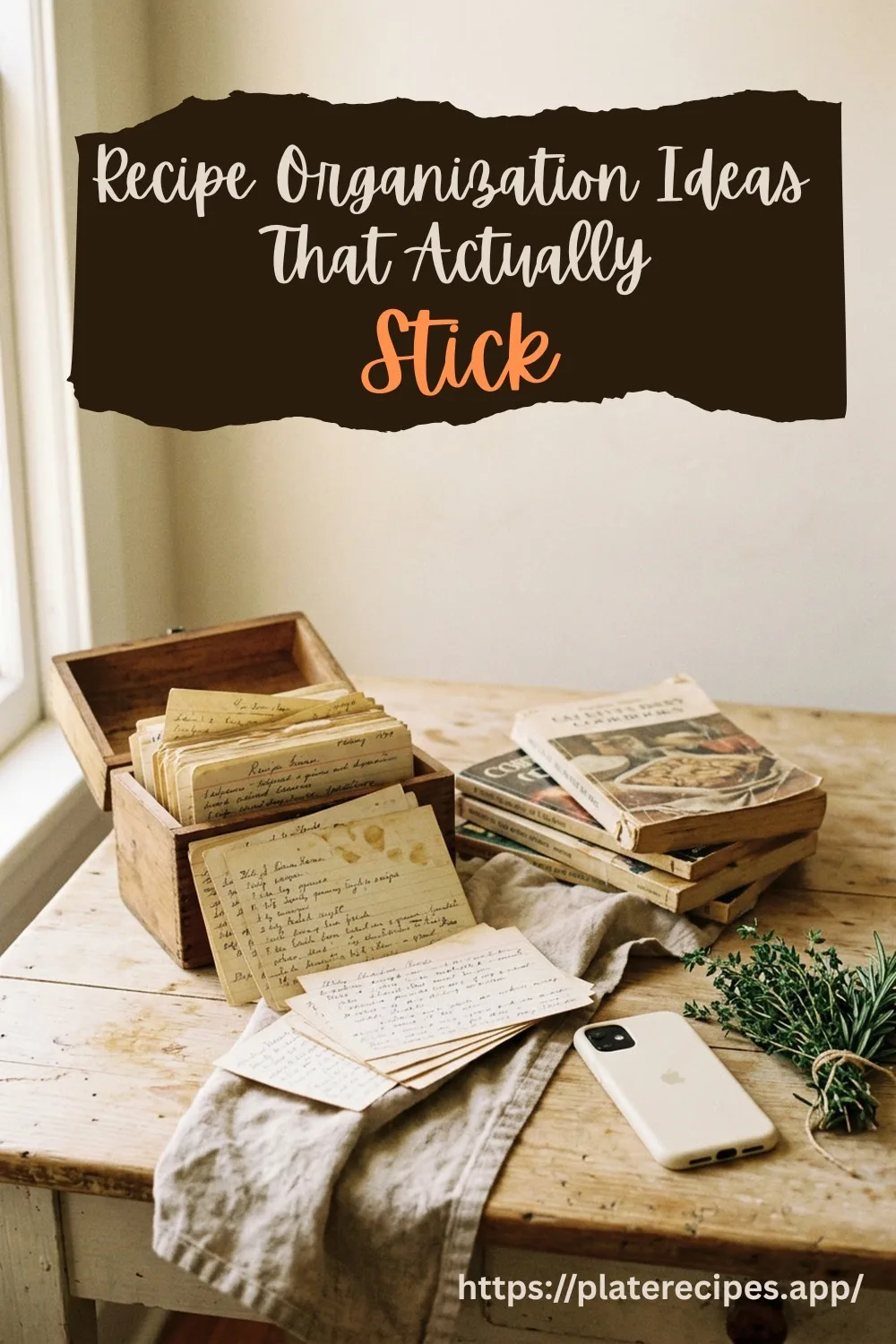
You went looking for the roast chicken. You know you saved it. You remember reading it twice and deciding you would make it that weekend. Twenty minutes later you have checked the wooden box, scrolled four months of screenshots, opened two cookbooks and searched a chat thread, and you are making pasta again.
That is the real problem with saved recipes, and it is not laziness. Your recipes live in four separate places, and none of those places can see the others.
The container was never the problem
Most advice on this subject sells you something to put recipes in. A binder with plastic sleeves. A card box with dividers. A folder system, color coded.
You probably own one already. Maybe two. And the recipes you actually cook are still the six you know by heart.
A container organizes objects. It does nothing for four formats sitting in different rooms of your life: paper cards in a drawer, printed pages in books, images in a camera roll, links in a chat. Each one has its own way of being searched, and none of them share an index. Filing them more neatly inside their own format does not connect them to each other.
Findable beats filed
A recipe is organized when you can find it by what you have, not by where you put it.
That is a different test from the one most systems pass. Alphabetical dividers answer the question "where does this go". They do not answer "what can I make with chicken thighs, forty minutes, and whatever is in the fridge door".
The second question is the one you actually ask, standing in the kitchen at seven o'clock. Any system that cannot answer it is storage, not organization.
Start with the ones that cannot be replaced
Before you build anything, photograph the handwritten cards.
This is the only genuinely urgent step. A card in your grandmother's handwriting exists in one copy. It is on paper that has already survived forty years of splashes, and it is one spilled pan away from gone. Everything else in your collection exists somewhere else as well. That card does not.
Lay each one flat in daylight near a window, no flash. One card per photo. Photograph the back too, even when it looks empty, because that is usually where the notes are. A full box takes about an hour.
Do this even if you never build a system. Especially then.
Give every recipe the same shape
This next part sounds too boring to be the answer.
Pick a shape and put everything into it: title, ingredients with amounts, steps in order, rough timing, and where it came from. That last field matters more than people expect. "Aunt Sema, 1998" and "saved from a video" are different kinds of trust, and you will want to know which one you are cooking.
The shape is what creates the shared index. Once a card from the box, a page from a cookbook and a link from a chat all read the same way, they can finally be searched together. Not because you filed them better. Because they became the same kind of thing.
This is also why the shape has to be boring. A format you have to think about is a format you abandon by the fourth recipe.
What you lose, and what you keep
Something does get lost here, and it is worth naming honestly.
The object goes. The stain from the time the sauce boiled over. The handwriting that changes halfway down the card because someone was interrupted. The crossed out amount with a better one written above it. A photograph keeps the image of those things. It does not keep the thing.
So do not throw the cards away. A digital copy is a second copy, never a replacement. Leave the box on the shelf where it has always been, and let the copy do the work of being searchable.
What you keep is the part that was at risk. The recipe now survives a move, a flood and a spilled pan. It can be sent to your sister in one message. It can be read by someone who never learned to read that handwriting.
A weekend that actually works
The backlog is a trap. Two hundred saved recipes feels like a project, so it never starts.
Begin from the other end. Photograph the irreplaceable cards, one hour. Then pick ten recipes: not the ones you saved, the ones you actually cook. Put those ten into the shape. That is your real cookbook, and it is finished by Sunday evening.
After that, add one recipe each time you cook something new. Six months later you have a collection made entirely of food you have eaten, which is a better cookbook than two hundred links you never opened.
Where a tool saves you the tedious part
Everything above works with a notebook and an hour. The tedious part is the retyping: reading a card, typing the ingredients, breaking the method into steps, estimating the timings, then doing it all again for the next one.
That is the part Plate does. Photograph a handwritten card, paste a link from a video, or scan a page from a cookbook, and it comes back in the same shape every time: ingredients with amounts, steps in order, timings, and a nutrition estimate. The shape is the whole point. Plate only saves you from typing it two hundred times.
The organizing idea stays yours. Start with the cards that cannot be replaced.
Your next recipe starts with a photo.
Turn any meal into a beautiful visual recipe. Be among the first to cook with Plate.