
September 11, 2026 · 4 min read
Cook what you already have: from pantry to dinner
Dinner is rarely a missing-recipe problem. It is a what-can-I-make-with-this problem. Here is how Plate searches from the ingredients in your kitchen instead of a dish name.

It is twenty to seven. There is half a cabbage, three eggs, one lonely carrot, and rice. You do not need another recipe site — you need to know what those four things can become before one of them goes soft.
That is the question Plate's pantry was built to answer, and it is a different question from the one most recipe apps are designed around.
Why is what's for dinner so hard to search?
Because recipe search expects the answer as its input. Type cabbage into most apps and you get a thousand results ranked by popularity, most of them needing three things you do not have. The one constraint that actually matters — what is in your kitchen right now — never enters the query.
Cooks do not think in dish names. They think in what is about to go off, what was on offer, what the children will tolerate. Constraint first is how a home kitchen really runs, and it is how searching for dinner should work.
How does the pantry work in Plate?
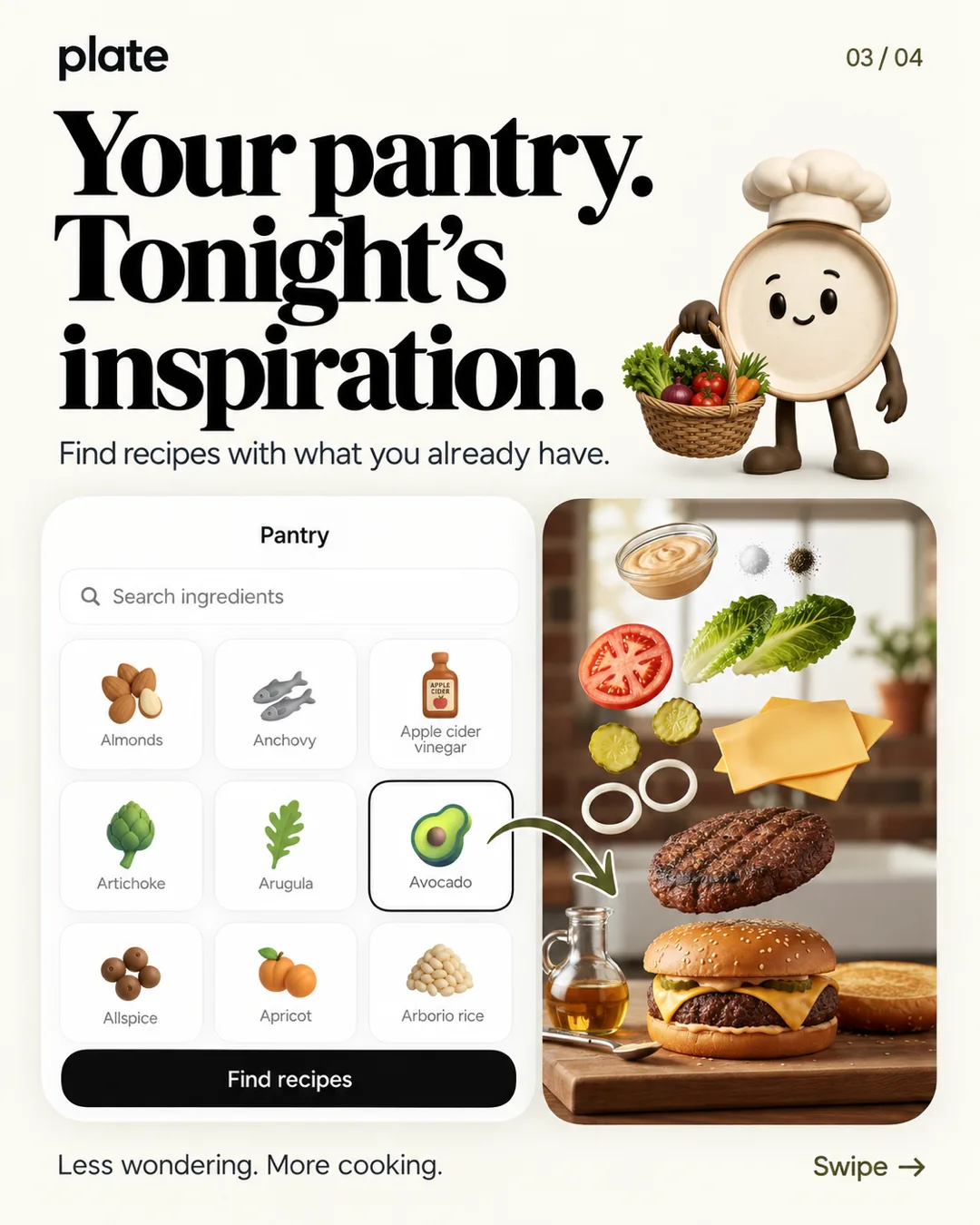
You tell Plate what you have. Search the ingredient list, tap what is in the kitchen — almonds, anchovies, arborio rice, the avocado that needs using — and Plate builds recipes around that set instead of retrieving a fixed list from a database. What comes back is a full recipe with quantities, steps, timing, and nutrition.
Because each recipe is written rather than looked up, small sets still work. Four ingredients and one pan is a legitimate starting point. So is three things plus whatever is in the door of the fridge.
Three ingredients are usually enough
Start with whatever spoils first. Add one starch and one thing with real flavour — an onion, a lemon, anchovies, chilli crisp — and you have the shape of a dinner. A tight, honest list beats a long one: list everything you own and the suggestions turn vague.
Then save what worked. Tonight's improvisation becomes a recipe in your cookbook, with its teardown cover and its nutrition attached, so next month you can cook it again on purpose rather than by accident.
What it will not do
It will not pretend you have what you do not. If the list is genuinely thin, the results are thin — which is the honest answer, rather than a recipe that quietly assumes a fully stocked spice drawer. Quantities are estimates too, and every one of them is editable when your carrot turns out to be enormous.
It will also not decide for you. The pantry is a way to see the options already sitting in the food you bought. The cooking, and the judgement about what sounds good tonight, stays yours.
Try it tonight
Open the fridge, list what is actually there, and see what comes back. Worst case, you spent a minute. Best case, you cooked the carrot before it became compost. Plate is free on the App Store, in twenty languages, and the pantry is there from the first launch.
Your next recipe starts with a photo.
Turn any meal into a beautiful visual recipe. Be among the first to cook with Plate.